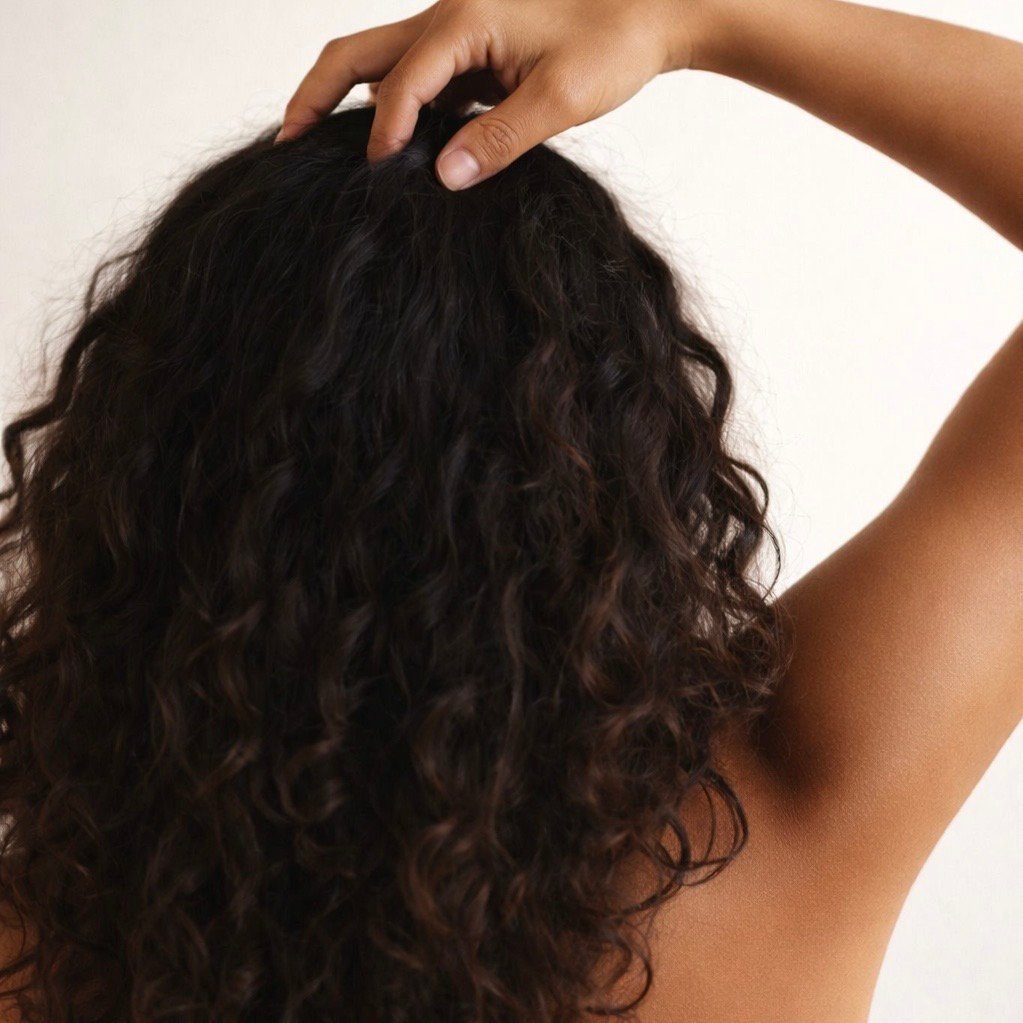
Many people assume an itchy scalp automatically means dryness.
So they add more oils.
Switch to heavier products.
Deep condition more often.
But sometimes the issue isn’t dryness. It’s irritation.
And one of the most overlooked triggers? Essential oils.
“Natural” Doesn’t Always Mean Gentle
Essential oils are highly concentrated plant extracts made up of volatile aromatic compounds. Because they’re so concentrated, even small amounts can stimulate the scalp’s nerve endings, which is why they’re often used in products marketed as “cooling” or “invigorating.”
For some people, it is.
For others, especially those with sensitive scalps, it can feel like:
- Persistent itchiness
- Tingling or burning after applying products
- Redness
- Tightness after wash day
- Flaking that doesn’t improve with more moisture
Sometimes that familiar “tingle” isn’t a sign a product is working. It’s simply your scalp reacting.
How to Tell If Your Scalp Is Dry or Irritated
Understanding the difference between dry scalp and irritation can completely change your routine.
Dry scalp typically feels:
- Tight
- Slightly rough
- Flaky in small, dry powder-like flakes
- Better after moisturizing
Irritated scalp often feels:
- Itchy or prickly
- Tingly or burning after product application
- Red or inflamed
- Reactive to certain shampoos or stylers
- Worse even after adding oils
If you’ve been adding moisture and your itchy scalp continues, irritation may be the real cause.
10 Essential Oils Commonly Found in Curly Hair Products
If you’re experiencing ongoing scalp discomfort, check your ingredient labels for:
- Peppermint
- Tea Tree
- Lavender
- Rosemary
- Eucalyptus
- Lemongrass
- Ylang Ylang
- Orange
- Lemon
- Clove
These ingredients aren’t necessarily harmful. Many people tolerate them well and enjoy the sensory experience. However, for sensitive scalps, repeated exposure, especially when using multiple products, can sometimes contribute to irritation.
Why It’s Often Mistaken for Dryness
When the scalp feels itchy or flaky, the instinct is to add more oil.
But if irritation is the real cause, layering heavier products doesn’t fix the issue. In some cases, it can make your itchy scalp feel even more reactive.
The result is a frustrating cycle where the scalp never quite improves.
What to Do If You Suspect Essential Oils Are Triggering Irritation
If this sounds familiar, try simplifying your routine for 2–3 weeks:
- Choose fragrance-free or essential oil-free products.
- Avoid layering multiple scalp-stimulating products.
- Focus on lightweight hydration instead of heavy oils.
- Give your scalp time to reset before reintroducing anything new.
Many scalps respond well to calm, consistent care.
A Gentle Approach to Scalp Care
At van + veronica Haircare, we formulate with sensitive scalps in mind. Our ingredients are U.S. Board-Certified Dermatologist Recommended, supporting scalp balance while avoiding unnecessary irritants.
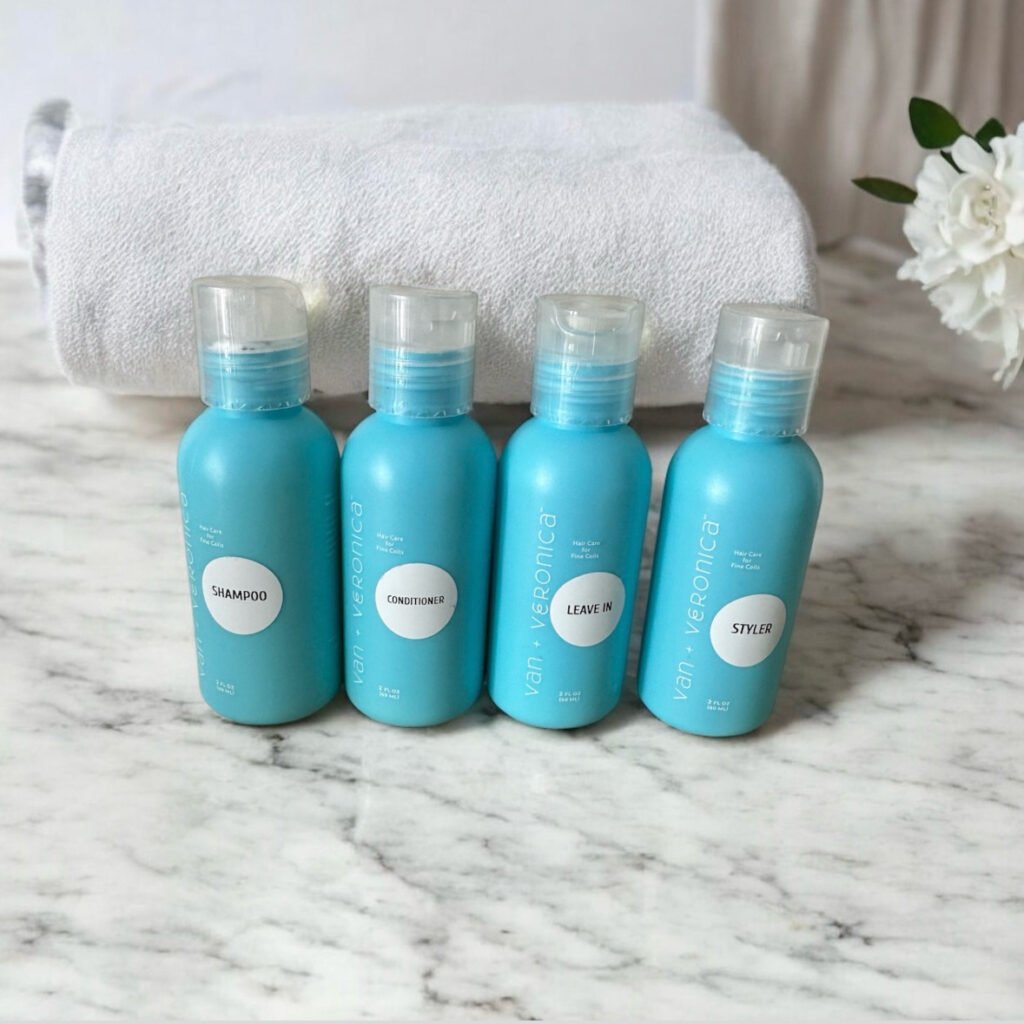
Our Fragrance and Essential Oil-Free Curly Starter Kit was created for those who prefer a simpler, low-stimulation routine — from gentle cleansing to lightweight styling. The formulas provide lightweight hydration and medium hold without fragrance, essential oils, or heavy oils and butters.
Because when your scalp feels comfortable, your curls can look and feel their best.
Sometimes less stimulation leads to a calmer scalp.
If you’re interested in safely testing new routines, you may also enjoy this guide: Try Before You Buy: Why Travel Size Curl Products Are the Best Way to Test New Products.
Disclaimer: This content is for educational purposes only and is not intended to diagnose, treat, or cure any scalp condition. If irritation or discomfort persists, please consult your physician or a board-certified dermatologist.